
Writing Advice…
If you talk to any creative person, they have advice on how to create. Whether it is writing, painting or sewing we all know what works for us, but that doesn’t mean it works best for everyone.
It might be easier to sew a blouse using a pattern, but it might be more fun to simply cut and sew until you get something you like. The problem with that is wasted time and materials, the benefit is something unique that is truly your own design. The same can be said for writing as well. The big debate over plotting or pantsing, which is better, which is more creative. Plotting, whether you do a simple outline or an in-depth analysis of characters, their goals and their arcs, and every detail of the world they live in, it will still require a bit of pantsing to flesh out the story. A pantser might not plan their stories ahead of time but during rewrites and editing they will make sure the characters’ goals and arcs are met, and the details of their world are concise.
So, my advice to the beginning writer is to just write. Write down your ideas for scenes, characters, dialogue and settings. Write down story ideas as they come to you even if it comes in complete stories. Write it down. Do not be afraid to start. Just start. For rarely is your first draft even remotely similar to what your story will look like in the final draft. Because this is the truth of a true writer, your first draft is not the finished product. For some stories you will rewrite and edit and rewrite again many times until you want to toss the manuscript in the trash. Other stories are nearly perfect the first time around. Notice I said nearly for it is only the rare unicorn that is perfect in the first draft, and it is so rare even those who have been writing for decades have never had it happen.
If you are writing only for your own pleasure then no, you do not have to edit or rewrite. No one else is going to read it. But if you wish others to read your work then it is imperative that you read through it, self-edit and rewrite, then when you’re feeling confident about the story share it with others. Have trusted friends, family members or members of your writer’s group read it and offer comment. Make sure most of these readers enjoy reading and enjoy reading your specific genre. The more familiar they are with the genre the more weight their opinion holds, but ultimately you are the architect of this story, and you have the final say in what stays and what goes. Don’t let others drive you away from the story you want to tell but listen when several say something isn’t working. Non writers may not know how to fix the problem, but they can see what isn’t working. Sometimes it is best to let a story rest and come back to it after a week or two with fresh eyes.
It is not unusual to end the day feeling as if you’ve really accomplished something and then start the next day feeling like you don’t know what you’re doing. We often have a love-hate relationship with our writing. We both think we’re brilliant and idiots in rapid succession. Pushing through those moments both good and bad to continue to write and improve is what separates the real writers from the wannabees. Writing isn’t easy. It is a job, and sometimes you simply have to put your butt in the seat and start writing, eventually, you will get where you need to be. You might have a lot of waste at first but eventually you’ll learn how to create your own way.
So my big advice is this…just write. We learn as we do.

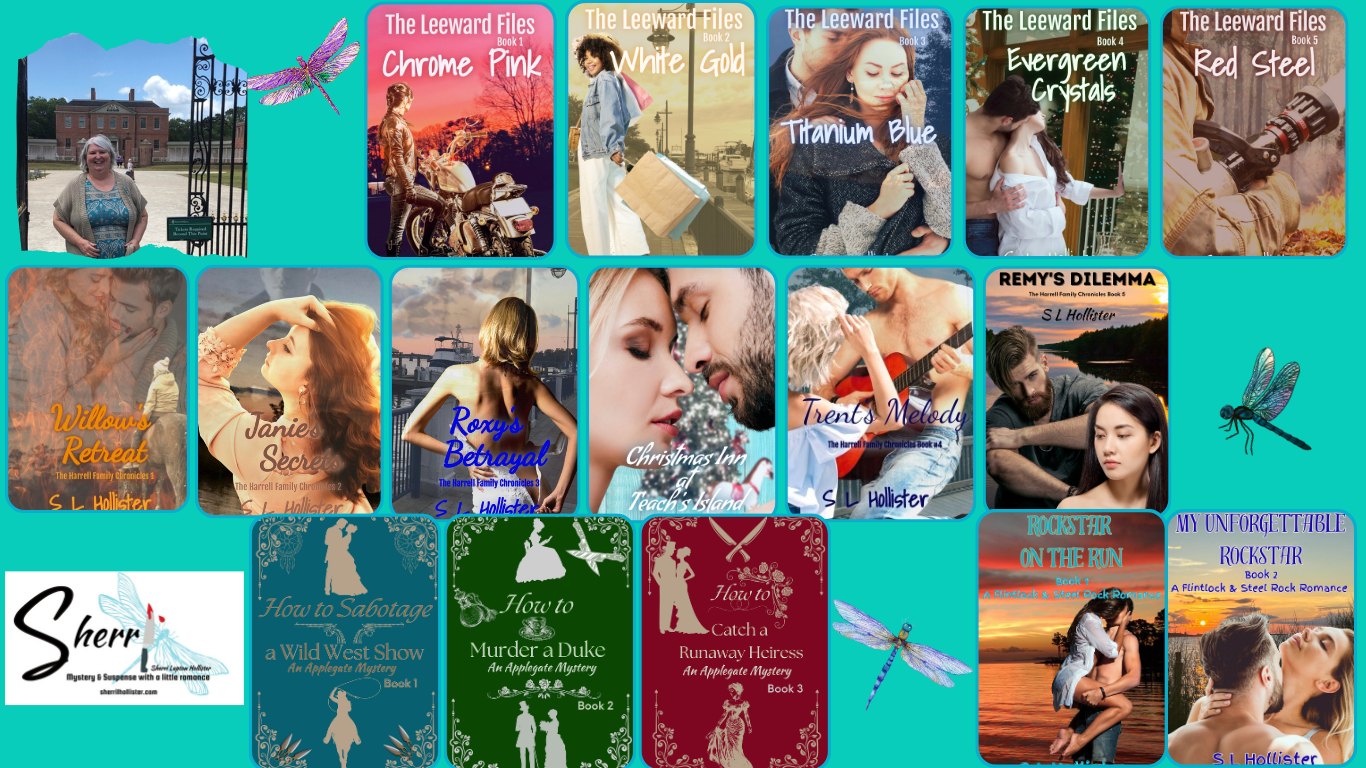
 Sherri Lupton Hollister, author
Good advice, Ms. Sherri. The woman who edits my books steered me to a book called something like “Scene by Scene” and I think his name is James Peckham. I read about 10 years ago, but the message has stayed with me. Write your book scene by scene and have each scene tell a story. Then have the scenes build on the over arching story line.
LikeLiked by 1 person